Group Road-Trip Planning Checklist (12 Steps)
To plan a group road trip, lock four things before you leave: a shared route with named regroup stops every 45–60 minutes, one live map every car can see, assigned lead and sweep drivers, and an emergency plan everyone knows. Sort those, and a multi-car trip runs as one group instead of scattered cars chasing each other down the highway.
The short version
- Share one route with named stops and a regroup point every 45–60 minutes.
- Put every car on one live map so nobody texts “where are you?” at 70 mph.
- Assign a lead and a sweep — a pace-setter up front, a last car watching the back.
- Agree an emergency plan — how to send an SOS and where to wait if separated.
- Write the checklist down and send it to every driver, not just the organizer.
When our own crew started taking multi-car night drives, the planning always fell apart in the same place: we’d agree the destination and forget the stops, then lose twenty minutes regrouping at the first gas station. The checklist below is the order we wish we’d used from the start.
What should a group road-trip planning checklist include?
A complete group road-trip planning checklist covers five areas: route, communication, roles, timing, and emergencies. The route names every stop and a regroup point roughly every 45–60 minutes. Communication means one shared live map plus a hands-free way to send quick status updates. Roles assign a lead car and a sweep car for the whole trip. Timing sets a realistic departure with buffer for slow fuel and food stops. Emergencies cover how to call for help and where to wait if a car gets separated. Miss one area and it becomes the thing that splits the group — usually communication or regroup points. Write the list down and share it with every driver, not just the organizer, so each car can self-correct without waiting on a phone call.
How far ahead should you plan a group road trip?
Start a few days to two weeks out, depending on size. A 3-car weekend run needs little more than a shared route and a group thread. A 10-car trip with lodging needs lead time to book rooms, confirm who’s driving, and agree stops. Do three things early: lock the date and headcount, draft the route with stops, and pick how the group will stay connected on the road. Leave the small stuff — snacks, playlists, seat assignments — for the last day. The planning that actually prevents trouble is the route-and-communication layer, and that’s worth settling while everyone can still weigh in, not in a parking lot at 6 a.m. with three cars idling.
Plan the route and set regroup points
Build one route every driver has, then break it into legs with a named regroup point at the end of each. A regroup point is a specific place — a named rest area or gas station — not a vague “next exit.” Spacing them every 45–60 minutes keeps legs short enough that a car which falls behind is never far from the next reunion.
| Trip leg | Regroup point | Buffer |
|---|---|---|
| Departure → leg 1 | Named gas station, ~60 min out | 10 min |
| Mid-trip | Rest area or food stop | 20–30 min |
| Final approach | Destination parking / meet spot | 10 min |
Share the full leg list before departure. A car that gets cut off at a light then simply drives to the agreed point and waits — no frantic calls, no doubling back across three lanes of traffic.
How do you keep everyone connected on the road?
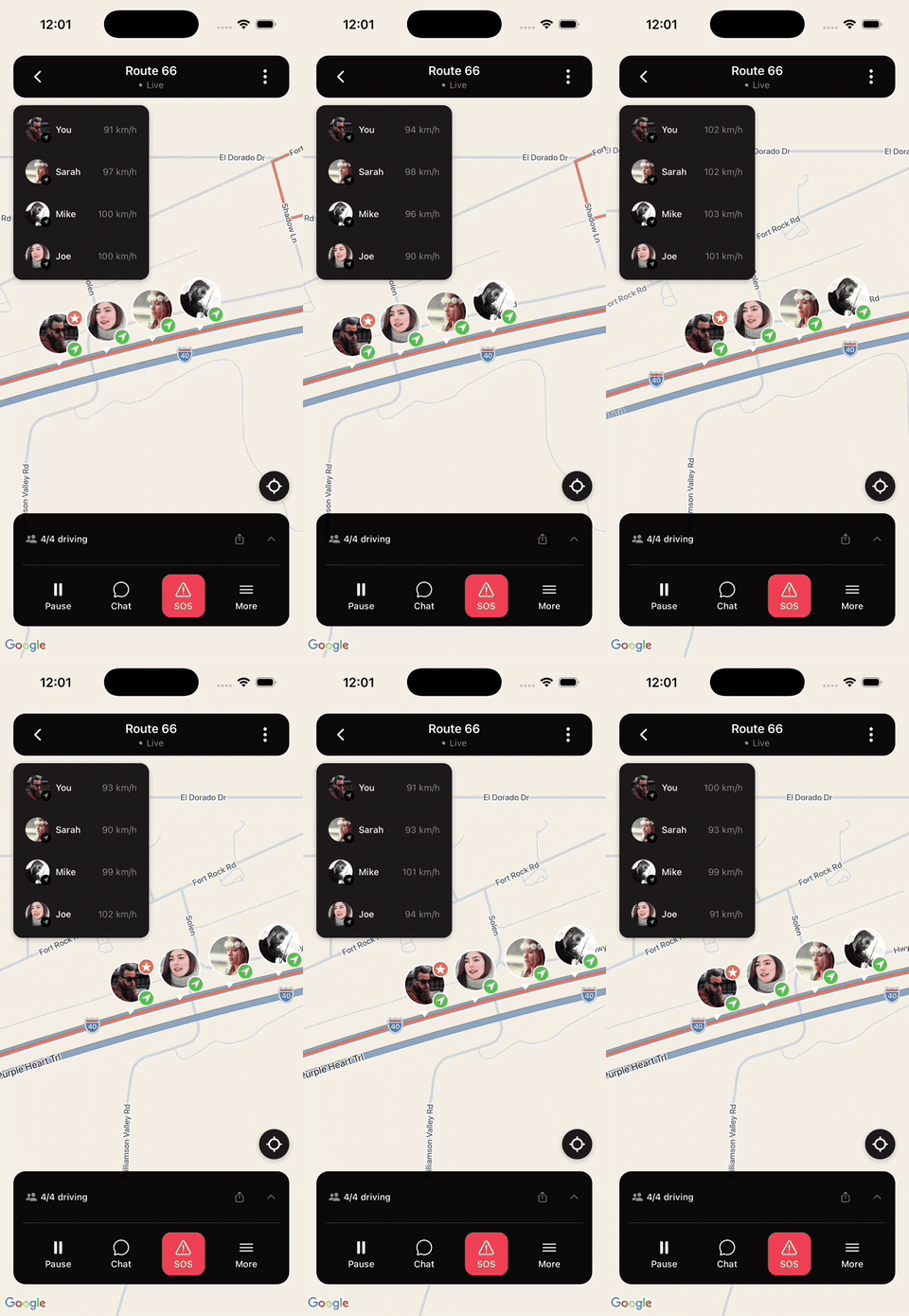
Put every car on one shared live map, not a flurry of group texts. Each driver glances at the map and sees every car move in real time, so a separation becomes a course-correction instead of a panic. Group-driving apps like Vamio do exactly this: the whole group joins one “drive,” everyone appears on the same map, and a typical hour-long drive uses only about 5–10 MB of data — less than streaming one song. On the free plan, a single drive holds up to 20 people on one map at $0, and you join by invite link with no sign-up. Location is shared only during the active drive and stops the moment it ends, so you get coordination on the road without anyone being tracked for the rest of the weekend. For a bigger event, split into multiple parallel drives and pair up the leads.
Assign driving roles before you leave
Fix two roles for the whole trip. The lead car sets the route and the pace and never speeds up to drop the back of the group. The sweep car drives last and calls out when the group is bunched up or strung out too far. With those roles set, every car in the middle only has to keep the vehicle ahead in sight — a far simpler job than tracking the whole pack. Organized convoys, motorcycle groups, and overlanding crews have run this way for decades because two clear roles do more for cohesion than any amount of mid-drive texting. The structure holds even when a signal drops or a map app stalls, which is exactly when you need it most. Decide the lead and sweep while you’re still parked, and write both names on the shared checklist.
What should go in the emergency plan?
Every group road trip needs a plan for the car that breaks down, crashes, or gets badly separated. Anything a driver has to read or type is a hazard: the U.S. National Highway Traffic Safety Administration notes that taking your eyes off the road for the five seconds a text takes is, at 55 mph, like driving the length of a football field with your eyes closed (NHTSA). So keep emergency comms to one tap. Vamio includes a one-tap SOS that alerts everyone in the drive with your exact location, plus in-drive chat and glanceable status messages for the non-urgent stuff (how we handle safety). Agree two defaults before departure: if you’re separated, continue to the next regroup point and wait; if something’s wrong, send the SOS and the group comes to you. Everyone should know both rules cold.
The 12-step group road-trip planning checklist
Run through this in order before you pull out:
- Lock the date and headcount — confirm every driver and car.
- Draft one route the whole group shares.
- Set regroup points every 45–60 minutes, each a named place.
- Choose how you’ll stay connected — one shared live map beats group texts.
- Send the invite link so every car is on the map before departure.
- Assign a lead car to set route and pace.
- Assign a sweep car to watch the back.
- Mount and charge phones — nobody holds a device while driving.
- Agree the separation rule — continue to the next regroup point and wait.
- Agree the emergency rule — send a one-tap SOS; the group comes to you.
- Confirm everyone has the checklist, not just the organizer.
- Do a 2-minute pre-drive huddle — restate the first stop and the roles.
For more on holding formation once you’re moving, see how to keep a group together on a road trip.
Plan your next group road trip with Vamio
Vamio is a free group-driving app for road trips and convoys on iOS 16+ and Android 10+. Build your checklist, start a drive, and share one invite link — no sign-up required for your crew to join — and everyone stays on one live map from departure to destination. Download Vamio before your next trip and keep the whole group together.
